
vol.07
It's exciting to witness the realization of dream new technologies, such as flying cars.
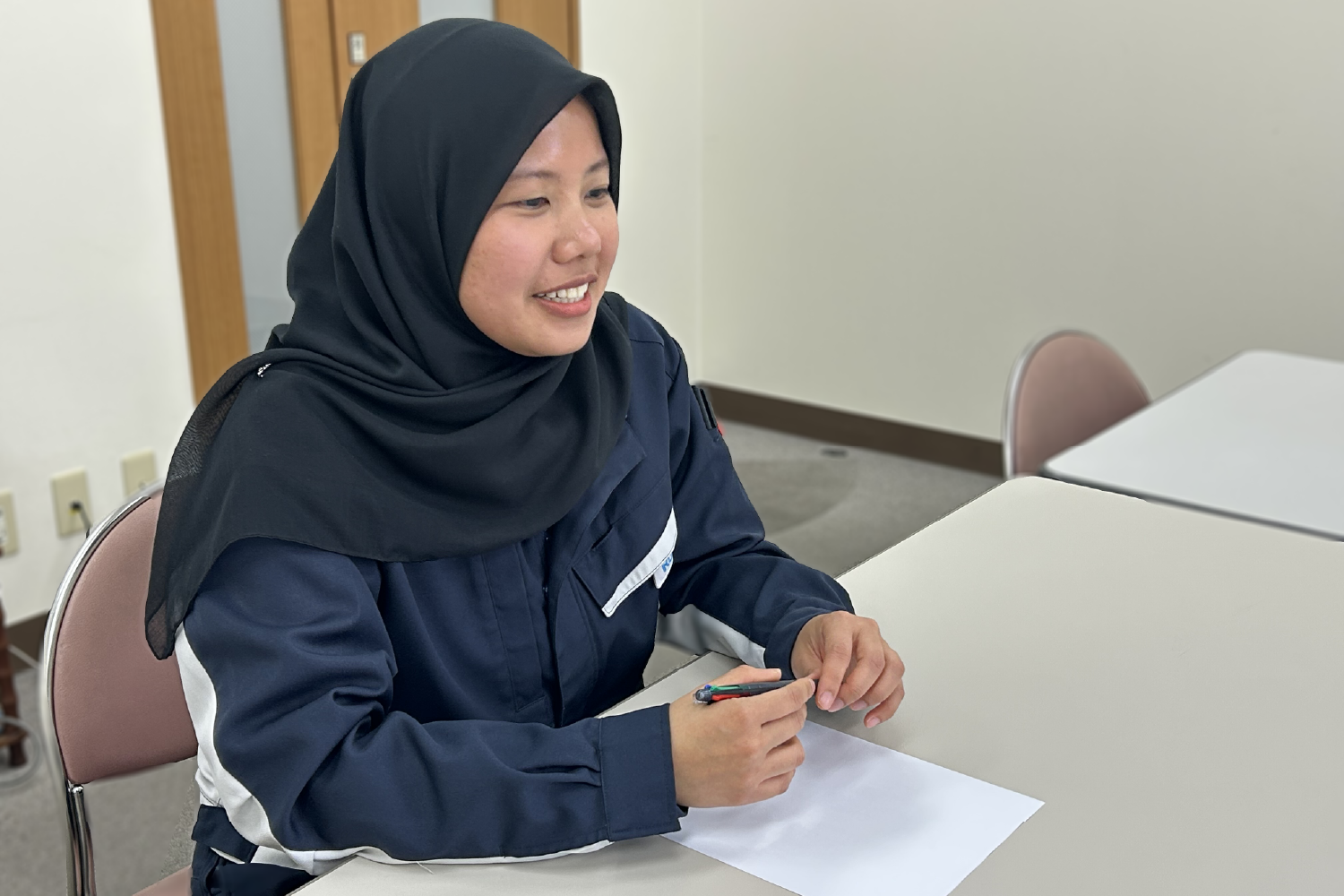
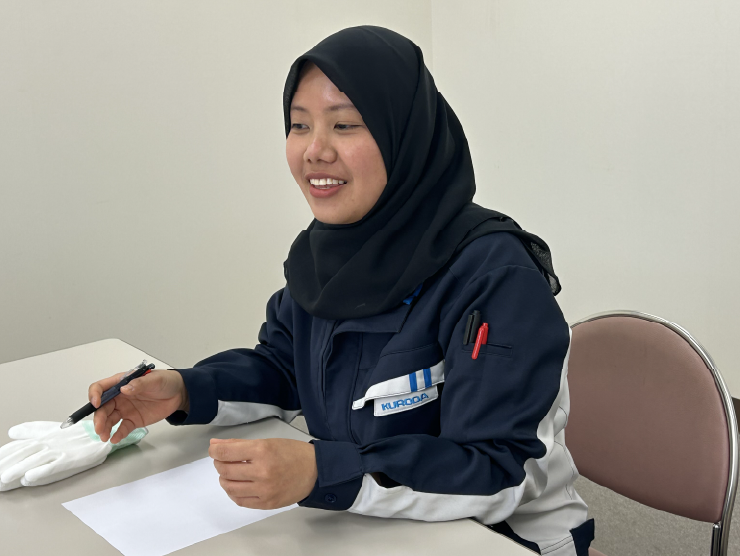
Prototyping technology and integrated production supporting high-mix, low-volume production
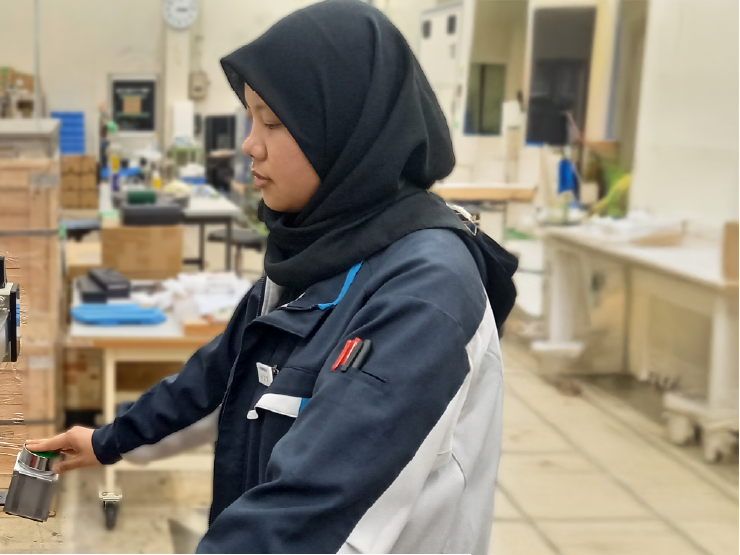
At the Nagano Plant, I am in charge of equipment fabrication for the motor core prototype production line. Unlike mass production items, my department, the New Product Development Section, manufactures a wide variety of motor core prototypes in small quantities. Instead of automatic lamination using large presses, we adopt a manual stacking method, where individual sheets are stacked by hand, enabling flexible and short-delivery responses. For example, for producing small quantities of cores, such as 18 at a time, we utilize this manual stacking method. Under the guidance and support of my senior colleagues, I am responsible for fabricating equipment for the prototype production line, engaging in the entire process from designing auxiliary jigs and adhesive components to actual assembly and lamination. Since we operate on a build-to-order basis, specifications vary for each project, and we consider the optimal method each time, including selecting adhesives to match the core's shape and specifications. I also participate in ongoing project meetings and offer improvement suggestions from a field perspective.
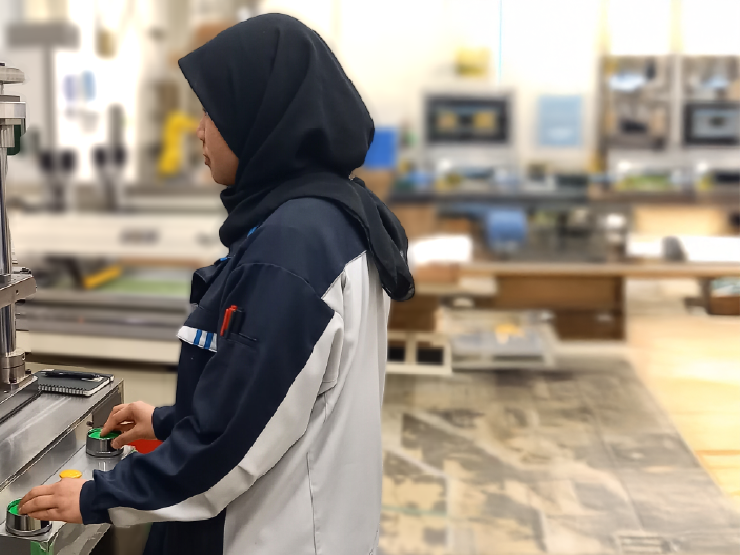
Sense of accomplishment and growth born from repeated prototyping
During the prototyping phase, before proceeding to mass production, we repeatedly review the design, shape, and manufacturing methods to achieve better results and finalize the product. Since each customer's performance requirements differ, we conduct multiple prototypes according to their requests, collaborating with suppliers to find the optimal methods. Smoothly managing production while making continuous adjustments is also a crucial daily task. The environment, which allows us to approach challenges from various perspectives, is refreshing and enhances our problem-solving skills. Although things don't always go as planned, I believe there's always an option that will lead to a good outcome, and by trying one thing after another, that accumulation of effort leads to growth. As someone who has always loved manufacturing, I feel a great sense of fulfillment at the moment when a completed motor core takes shape and is delivered to a customer.
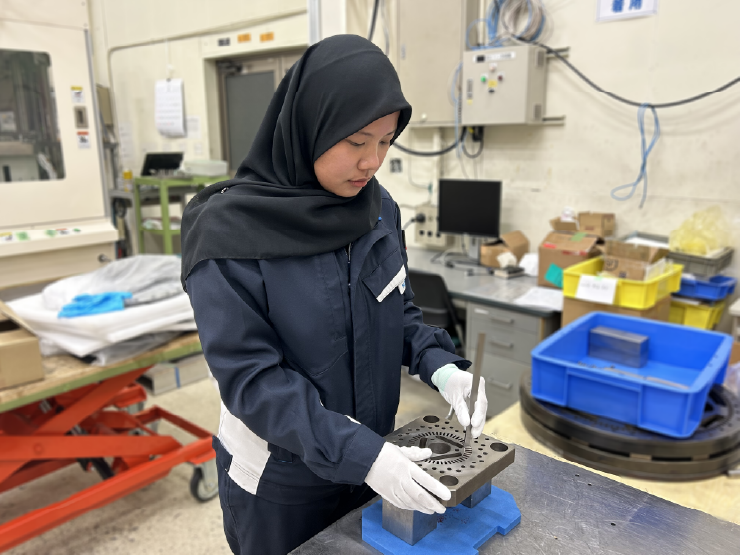
A warm workplace that values mutual support and safety
My department is very cooperative, with an atmosphere that values teamwork. While there are many situations that require quick action, we work closely and collaboratively between departments to help each other and meet deadlines. Although I am one of the few women working in a site where large presses and forklifts are constantly moving, everyone around me is very kind and supports me daily. A culture that prioritizes safety is also deeply rooted, providing an environment where I can confidently take on challenges. My supervisor takes a hands-on approach, often visiting the site, and is someone I can easily consult with. I also feel that this workplace offers many opportunities to learn through practical experience, allowing me to truly feel my growth as I work hands-on.
Adapting to time management, language barriers, and responsibility
Since joining the company, there have been significant changes in my daily life and way of thinking. In particular, it was challenging to get accustomed to the heavy sense of responsibility and to manage my time efficiently. As a student, I could plan my schedule at my own pace, but as a working professional, work is influenced by deadlines and team circumstances, and it cannot be completed by my efforts alone. Furthermore, in my first year, I encountered many unfamiliar terms, and the fact that different people sometimes used different names for the same thing meant I couldn't always understand instructions immediately, which sometimes made me feel anxious. Initially, it was difficult to keep up with the pace, and work didn't always progress as I wished, but through these experiences, I learned how to prioritize and develop adaptable problem-solving skills, gradually gaining confidence. I intend to continue growing by accumulating experiences one by one.
Connecting high-precision technology and customers through trust
Our company's strength lies in its high-precision processing technology and deep expertise in motor core manufacturing. Under strict tolerance control, we produce high-quality laminated materials and molds, maximizing motor performance. When compared to other companies' products under the same conditions, KURODA's products had absolutely no gaps, allowing me to truly appreciate their high quality. Furthermore, by adopting a customer-centric approach, we have met the requirements of each project and built long-term relationships of trust. KURODA's 100-year history, celebrating its centennial, is a journey of continuous challenges in response to technological advancements and market changes. While learning on the job, I am actively involved in new challenges for the next 100 years, creating value with my own efforts based on cultivated technology and trust, and together, shaping KURODA's future. I approach my daily tasks with such determination.
Contributing to technological innovation by supporting material selection and transition for future technologies
For KURODA, with its 100-year history, to continue growing, it is crucial to constantly challenge new technologies and maintain competitiveness. In the New Product Development Section, I have the opportunity to work on new technologies that were once dreams, such as flying cars, and the development of motor cores using thinner laminated steel sheets, allowing me to learn hands-on. In today's rapidly evolving technological landscape, I keenly feel that what was once imagination is becoming reality, which is very stimulating. Information on new materials is not available online, so I directly contact steel manufacturers and conduct repeated experiments. Since the properties of the same material can vary by manufacturer, I feel that my own experience is indispensable. Furthermore, thin laminations are particularly important for high-speed motors, but their production becomes more complex and increases costs. Through these projects, I aim to experience the characteristics and challenges of new materials, support a smooth transition from current steel materials to those suitable for future markets, and contribute to KURODA's technological innovation.