
2026.04.20
The KURODA Story
Solving problems as a team leads to personal growth.
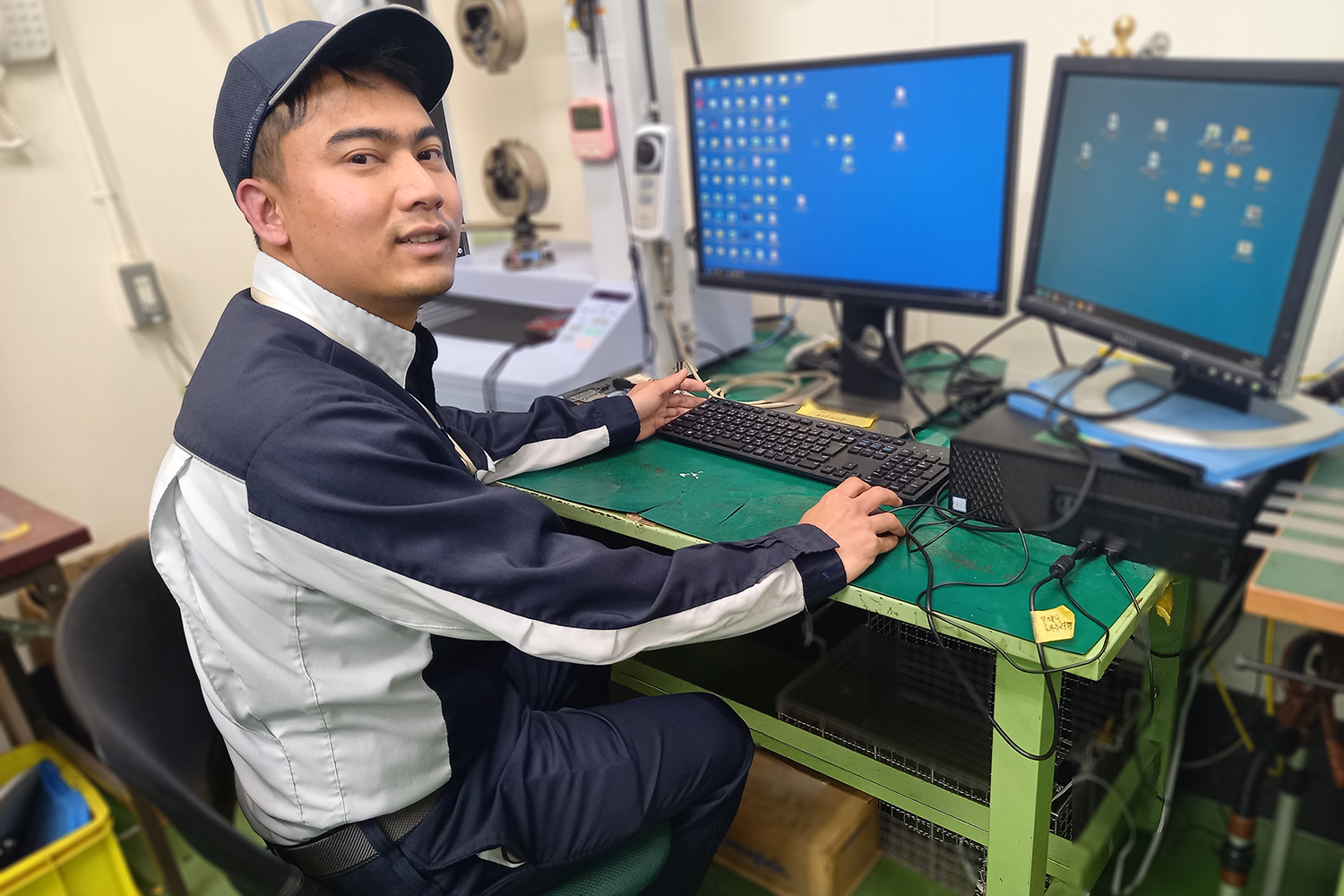
Adhesive evaluation and jig design to support mass production processes.
In my department, I am involved in the development of adhesive lamination processes as part of the FASTEC System, which is a mass production technology for motor cores. My main responsibilities include evaluating adhesives through experiments and designing the jigs used for these experiments. I use 2D and 3D CAD software for layout and jig design. In experiments involving adhesives, I investigate how well the adhesives used in motor components withstand heat and maintain strong adhesion. Jigs are crucial for effective experimentation and verification. I also work on identifying issues within the mass production process and considering jig improvements to ensure stable production flow. While it's not product design, I am responsible for a part of the operations that support the entire mass production process.
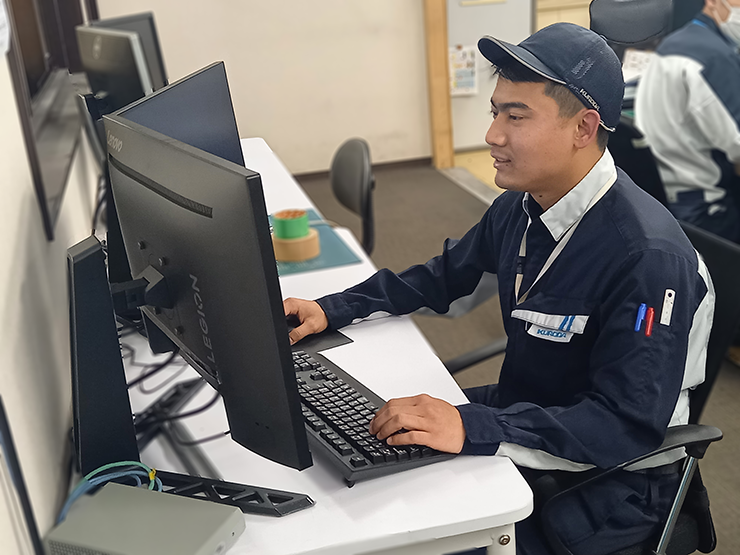
Teamwork and growth in overcoming challenges.
In my job, I feel joy and fulfillment when things go as planned. When a task I'm responsible for proceeds smoothly and is recognized by my superiors and senior colleagues, it's a great source of encouragement. On the other hand, even when things don't go according to plan, I find a different kind of fulfillment. There were times when a jig I designed didn't work as expected. In those instances, I worked with my superiors and senior colleagues to understand why it wasn't working and overcame the challenge by implementing improvements. When my superiors and senior colleagues support me, and we collaboratively think through improvements to overcome challenges, revealing the next steps, I feel a stronger sense of accomplishment and personal growth. That's why, when I encounter difficulties, I make sure not to ponder them alone but to consult with my superiors and senior colleagues. I believe this is a crucial point not only for resolving problems quickly but also for proceeding smoothly with work without spending too much time on design.
A warm environment like a "second family" where I can consult on anything.
For me, as someone working in Japan for the first time as a professional, not in my home country, my current workplace and department feel more like a "second family" than just a workplace or department. My superiors, senior colleagues, and co-workers all treat me, a foreigner, with warmth. If I have any questions about my tasks, they provide thorough explanations and guidance, and it's an easy environment to discuss technical matters. Although I tend to focus solely on product design, I receive advice that even considers manufacturing issues. I've been taught that design requires not only rigor but also consideration for manufacturing feasibility, equipment, precision, and process planning. Moreover, I feel that it's a workplace with a very good atmosphere where I can openly discuss not only work-related concerns but also any difficulties or worries in my personal life. This allows me to work with peace of mind, even in a different culture and country.
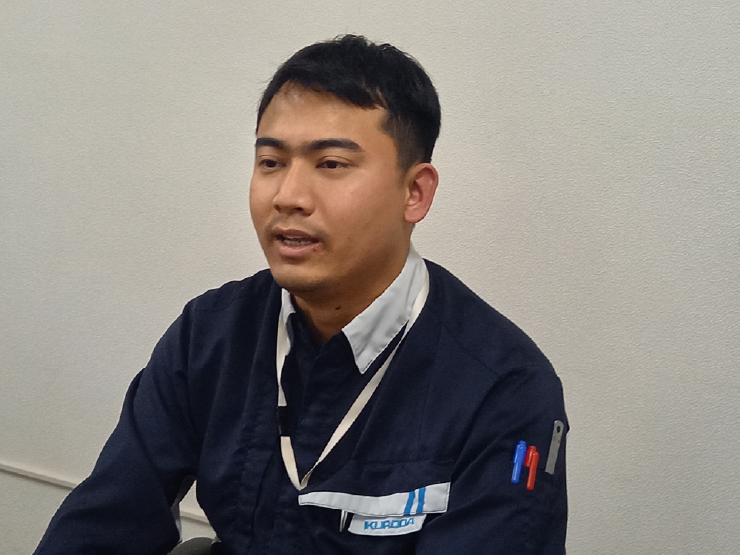
Adapting to a different culture and acquiring technical terminology.
Although I gained specialized knowledge at university, there are many differences in actual work, and it took time for me to get accustomed to the workplace atmosphere and work procedures. Especially as a foreigner, working in a different culture and country, it was challenging to get used to the Japanese language and Japan's work style. In meetings, many technical and business terms were used, and I struggled to understand them. Furthermore, I had to learn the basic requirements for a working professional one by one, such as the rules for design drawings, work procedures, and "Horenso" (reporting, contacting, and consulting). To improve this situation, whenever an unfamiliar technical term came up in a meeting, I would immediately look it up on my computer and compile notes in both Japanese and English, much like a vocabulary notebook. By doing so, I was able to understand the content of meetings within about six months of joining the company.
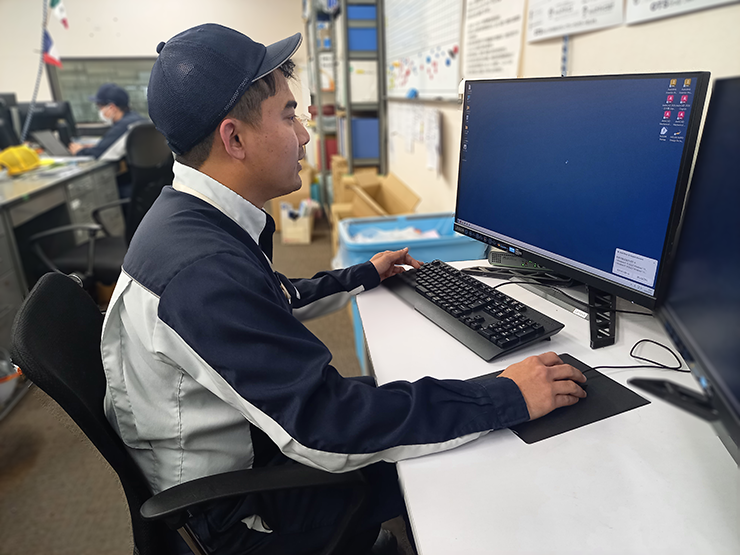
Building expertise and self-growth within a culture of continuous improvement.
I believe KURODA's strength lies in its culture of valuing people and supporting their growth. In our work, there's a culture of sharing not only successes but also challenges and areas for improvement with colleagues, allowing us to tackle tasks without having to bear the burden alone. Furthermore, the philosophy of continuously improving within the mass production process is deeply ingrained. I myself have repeatedly considered whether there are any unnecessary processes, and I've had successful experiences by actually eliminating some waste. I feel this is an environment where I can continue to learn through daily tasks, and the fact that I, as a foreigner, receive careful guidance is a significant strength.
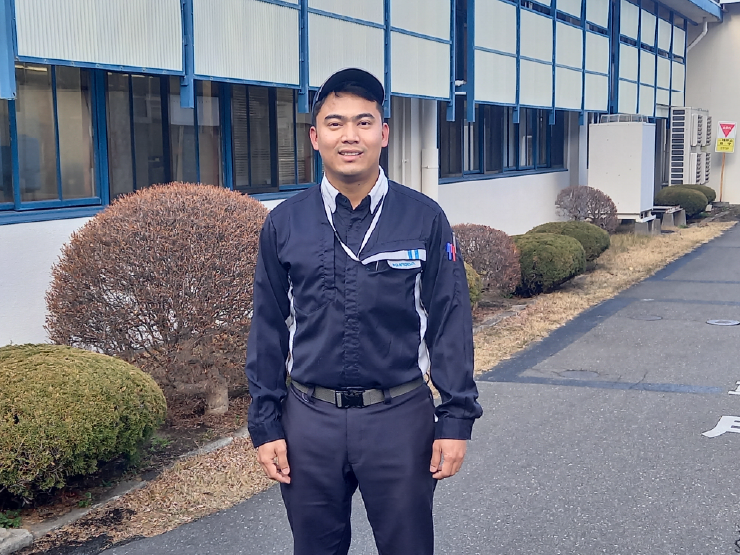
Accumulating knowledge and experience to discover my unique strengths.
While I don't have a clear vision for the future at this moment, my immediate goal is to thoroughly understand my current responsibilities and meticulously build upon each task. Regarding Japanese, having passed the JLPT N1, I now aim for a business level proficiency in the BJT Business Japanese Proficiency Test, striving for smoother communication in practical work. In terms of my professional role, I intend to gradually broaden my scope of work, building upon my current responsibilities, and deepen my understanding of technology, specialized knowledge in the motor core mold field, and design and process development. I want to leverage my experience of acquiring Japanese through work, accumulate knowledge and experience, and ultimately discover my unique strengths.